Power Pack for Jira

Clear responsibilitiesShared quality checksVisible decisions

Clear ownership.
Confident delivery.

Keep responsibilities, acceptance criteria, risks, decisions, and sign-offs alongside your Jira issues. Give your team a shared view of what it takes to deliver.

Jira issue · Customer portal releaseIllustrative workflow

One issue. A clearer way forward.

01

Align the team

Assign responsibilities and decision roles.

02

Define done

Agree on quality checks and acceptance criteria.

03

Plan for risk

Identify concerns and give mitigation an owner.

04

Review together

Record decisions and organize stakeholder sign-offs.

Bring clarity to the work behind the ticket.

Make ownership clear.

Give everyone a clear role in the work and the decisions behind it.

Agree on what done means.

Make quality expectations and acceptance criteria visible before work begins.

See risks while there’s time to act.

Discuss what could go wrong, assign owners, and plan a response.

Keep the why with the work.

Give decisions and stakeholder reviews a clear, lasting place on the issue.

01 / RACI / DACI matrix

Make ownership clear.

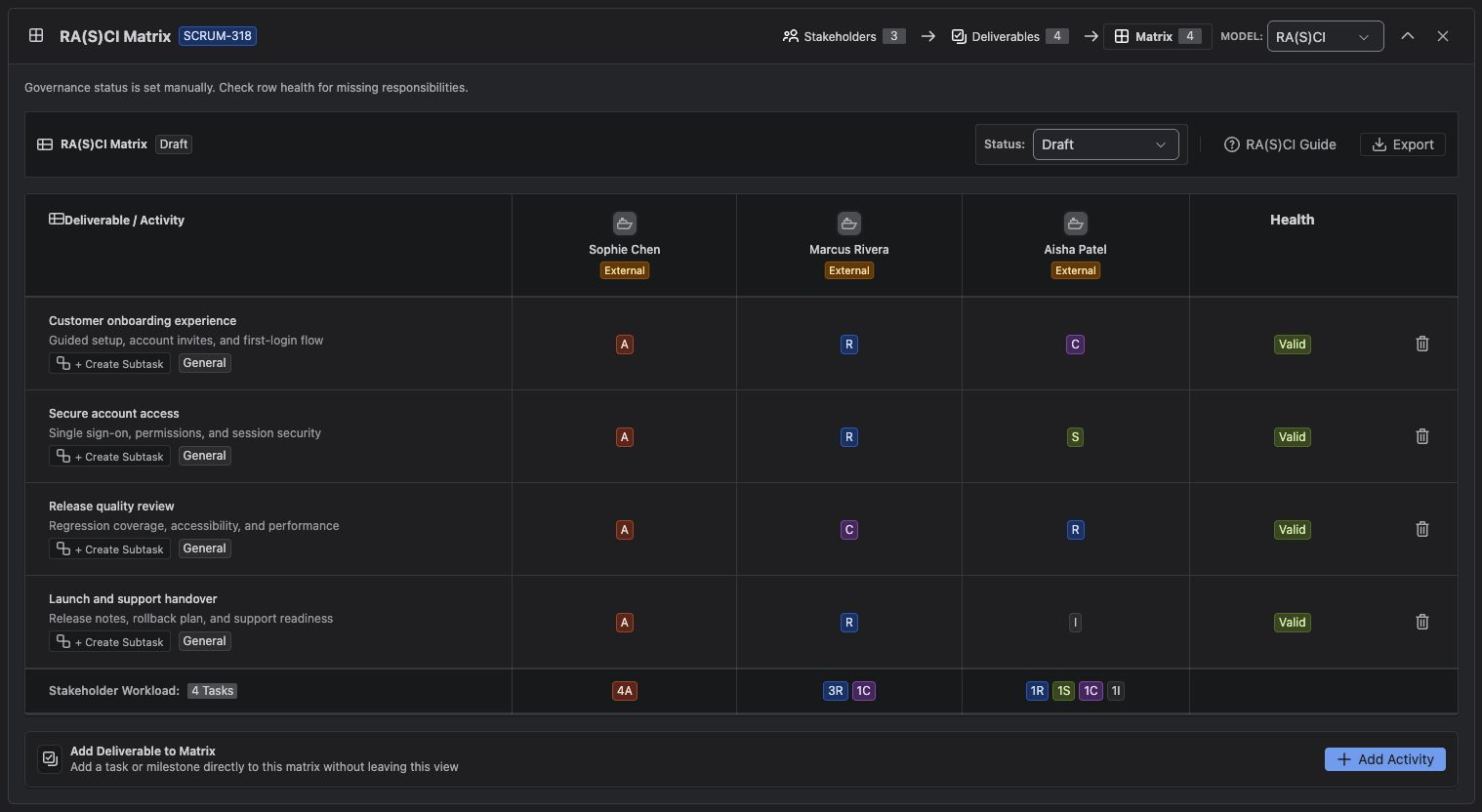
Turn “who is handling this?” into a shared agreement. Map responsibilities and decision roles directly alongside the Jira issue, so your team knows who to involve.

  • Responsibilities. Organize deliverables and stakeholders in a RA(S)CI matrix.
  • Decisions. Use DACI to identify a driver, approver, contributors, and informed stakeholders.
  • Shared context. Review assignments together and export a Markdown table or CSV when needed.

RACI / DACI matrix

Organize deliverables and stakeholders in a RA(S)CI matrix.
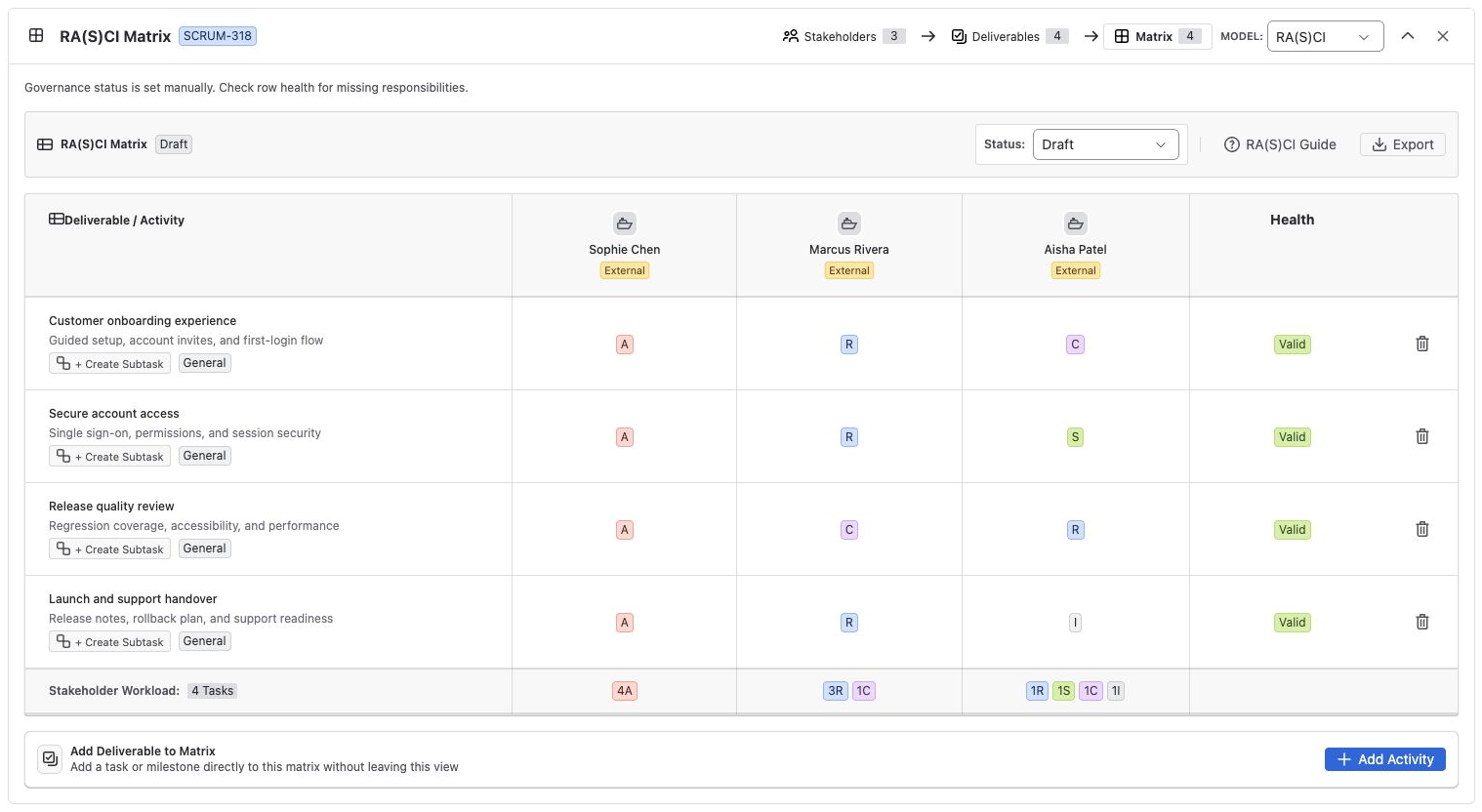
RACI / DACI matrix

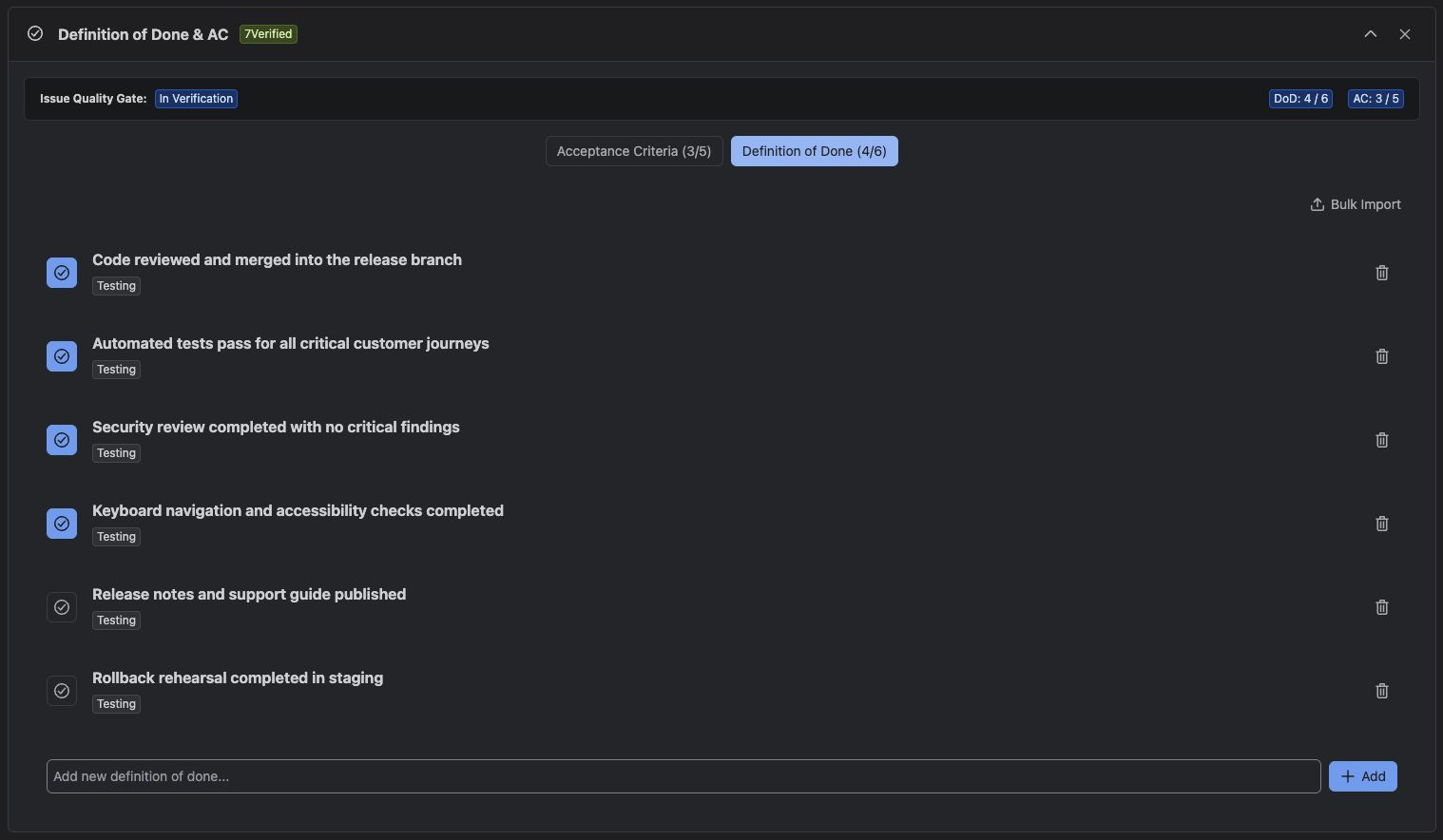
02 / Definition of Done & acceptance criteria

Agree on what done means.

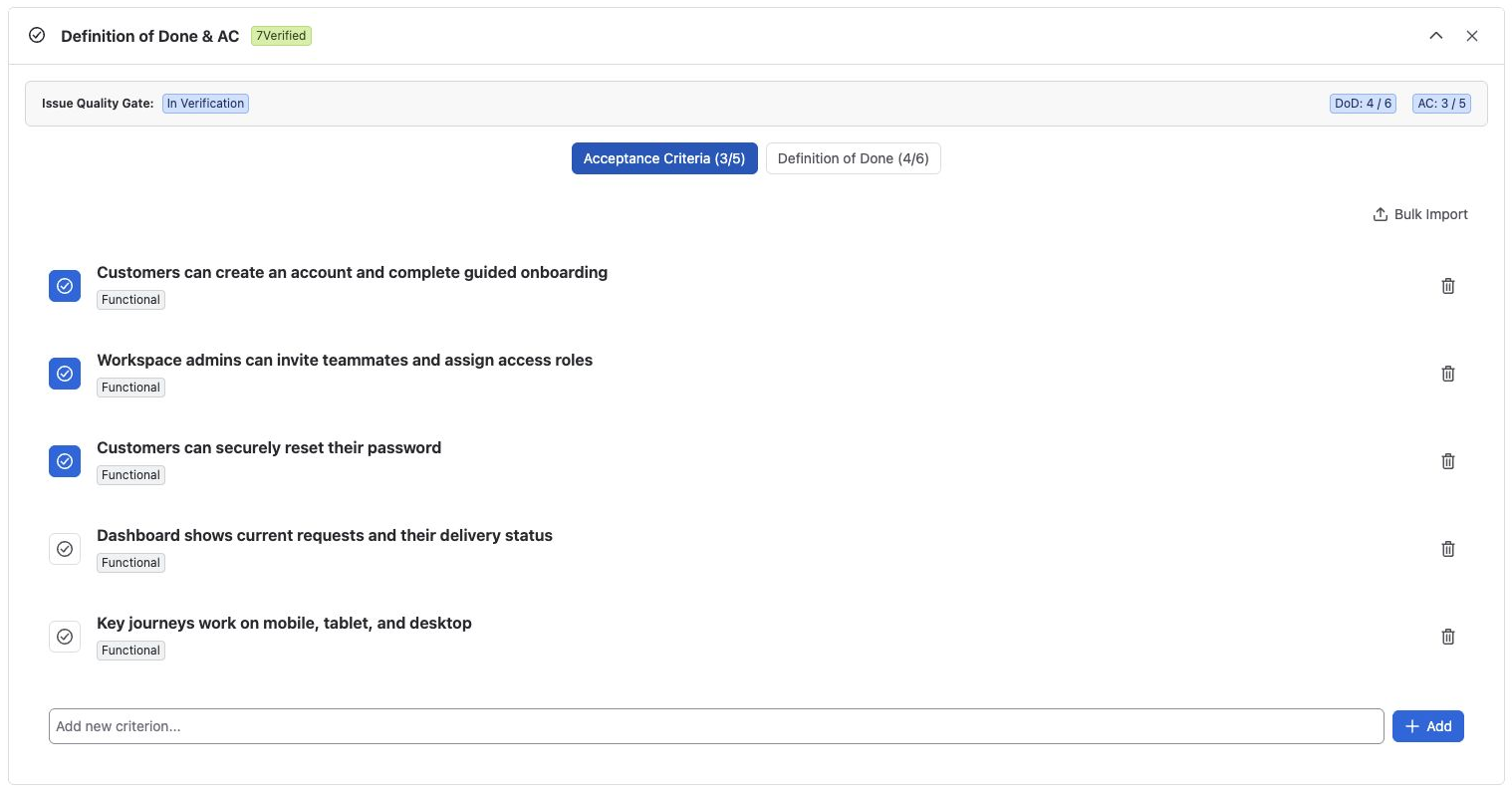
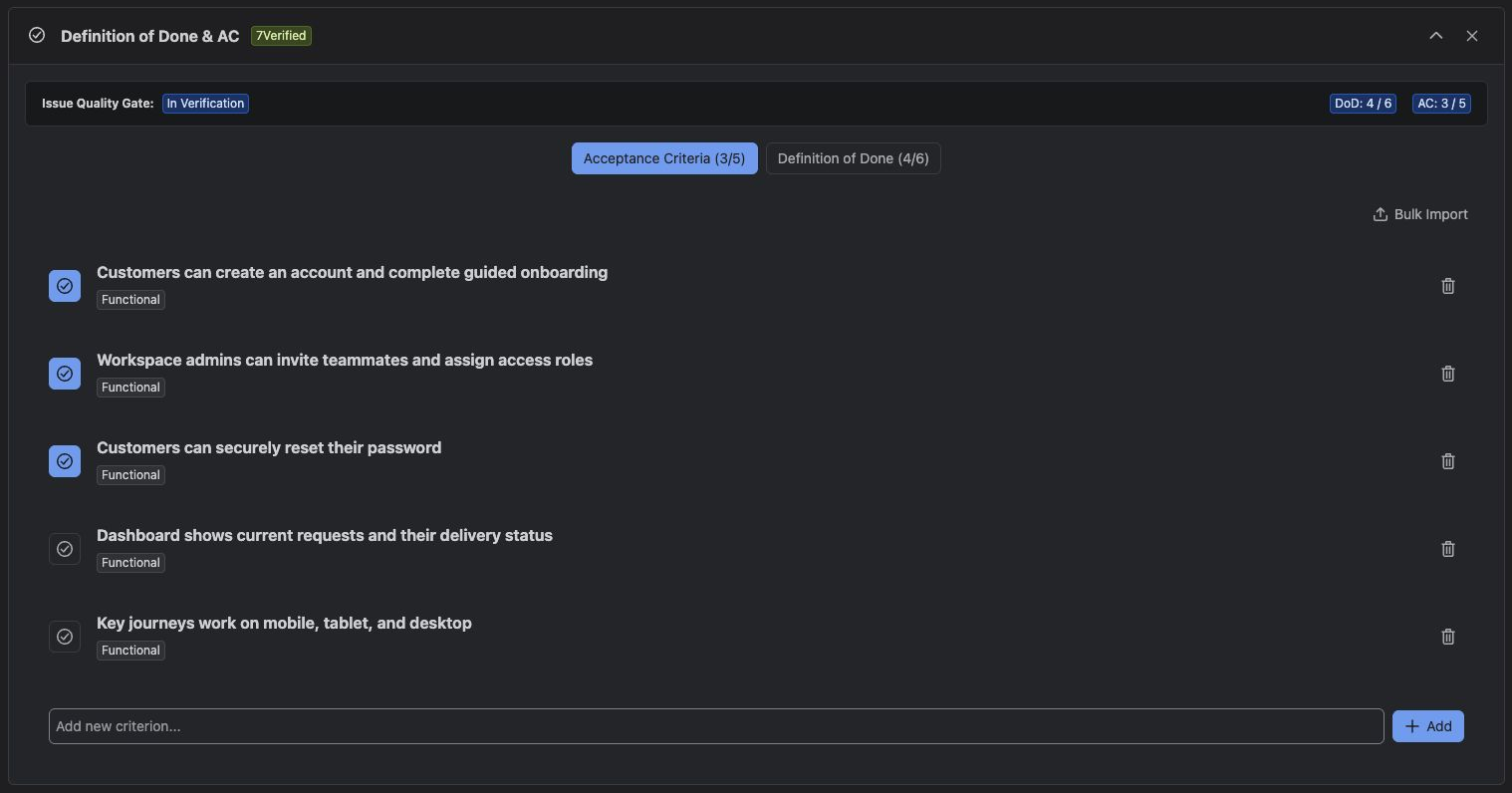
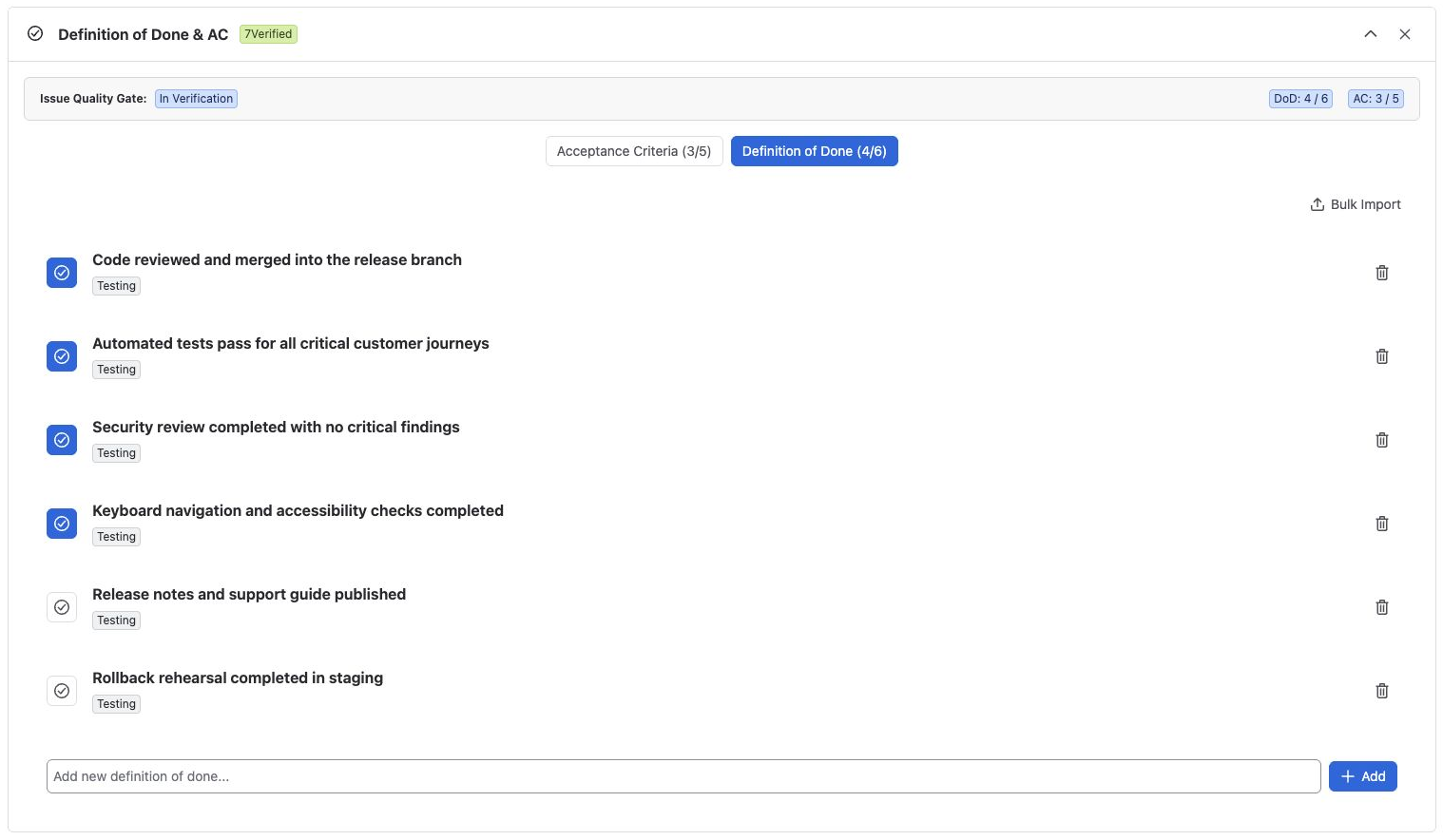
Bring the team’s quality checklist and the issue’s specific acceptance criteria into the same conversation. Keep expectations close to the work they describe.

  • Definition of Done. Capture the quality checks your team expects work to meet.
  • Acceptance criteria. Describe the outcomes that make this particular issue complete.
  • Progress. Review completed checks and outstanding work together.

Acceptance criteria

Describe the outcomes that make this particular issue complete.

Acceptance criteria

Definition of Done

Capture the quality checks your team expects work to meet.

Definition of Done

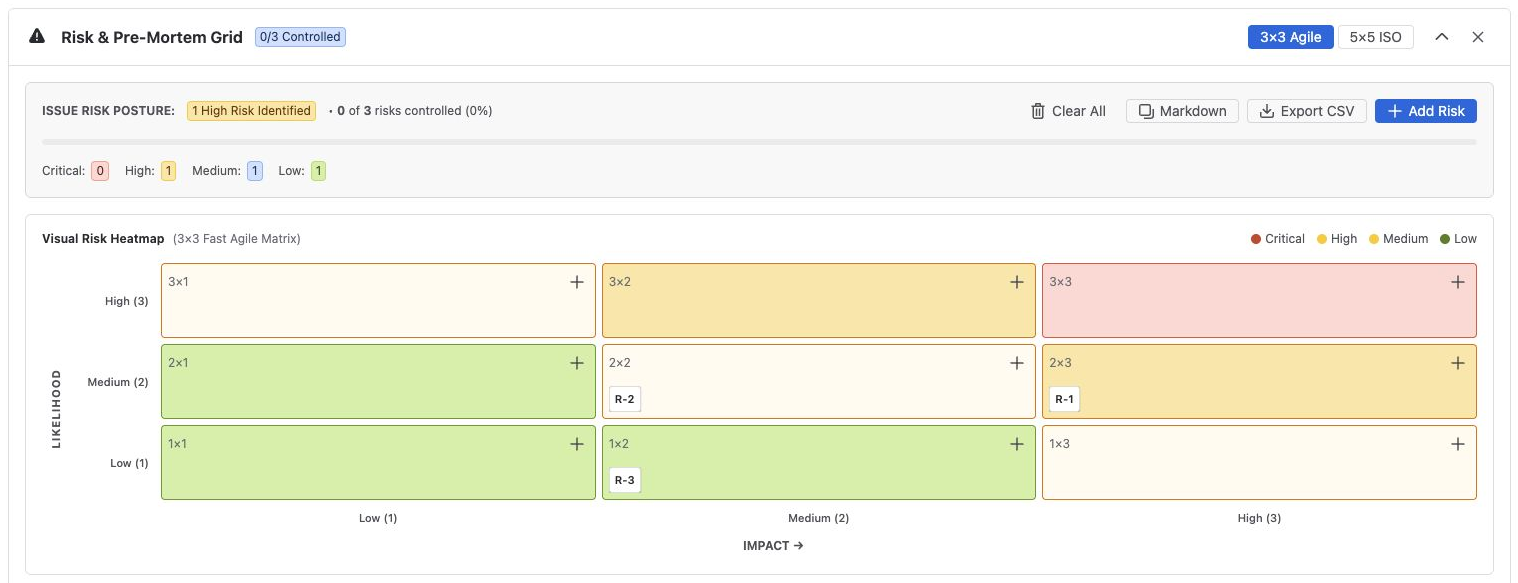
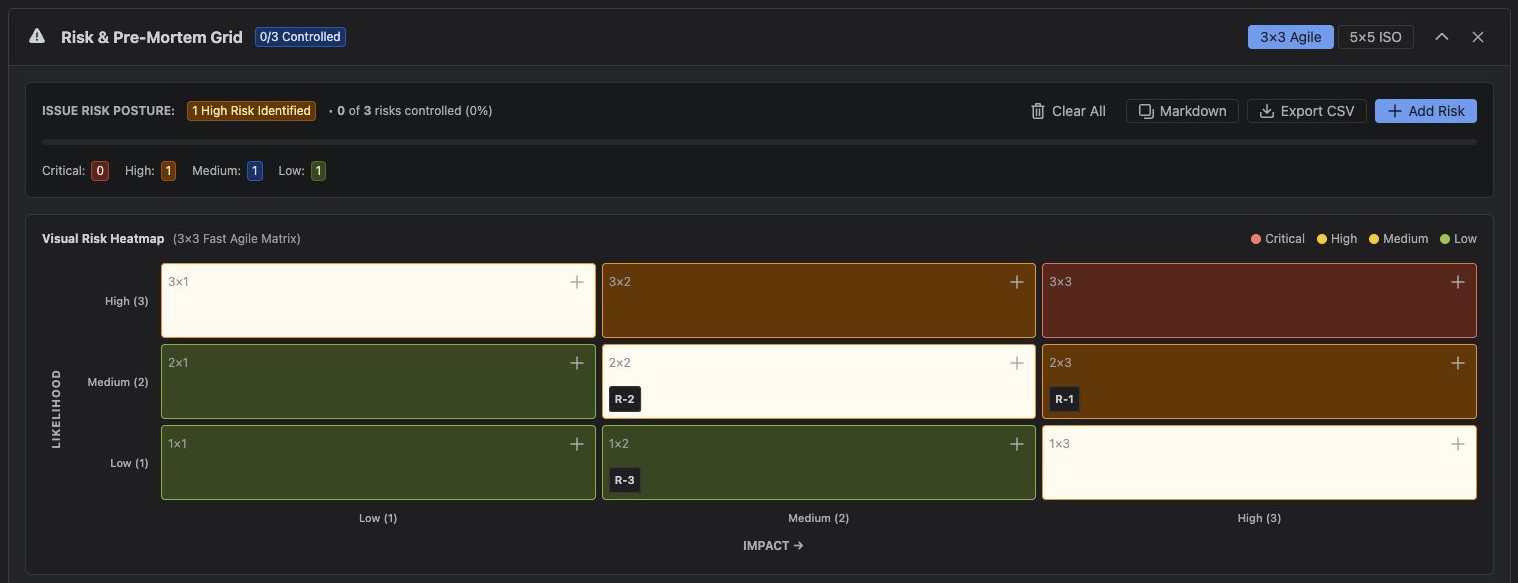
03 / Risk & pre-mortem grid

See risks while there’s time to act.

Give delivery risks a place in the issue. Run a pre-mortem, assess likelihood and impact, and keep mitigation plans visible as the work changes.

  • Risk matrix. Explore ratings in a 3×3 or 5×5 grid.
  • Early signals. Record failure scenarios and warning triggers.
  • Mitigation. Assign owners and track mitigation checkpoints.

Risk & pre-mortem grid

Explore ratings in a 3×3 or 5×5 grid.

Risk & pre-mortem grid

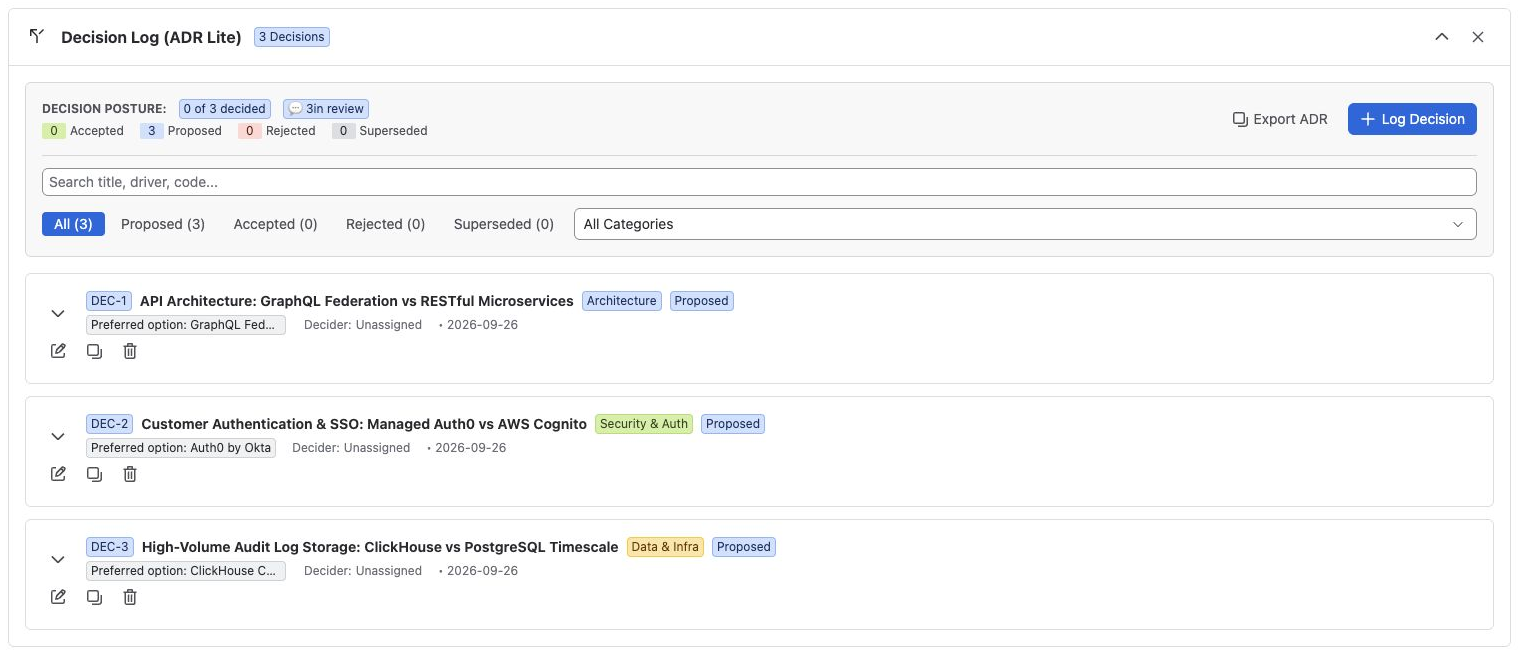
04 / Decision log & stakeholder sign-offs

Keep the why with the work.

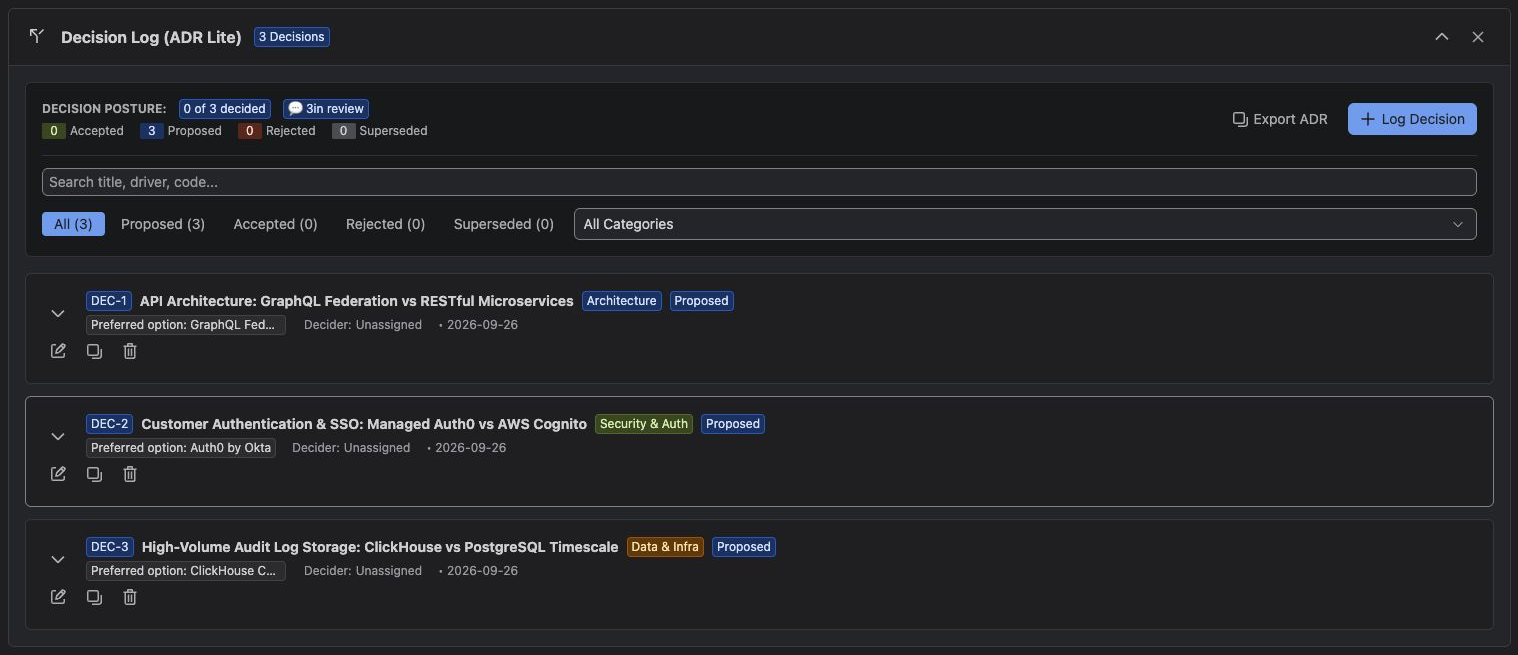
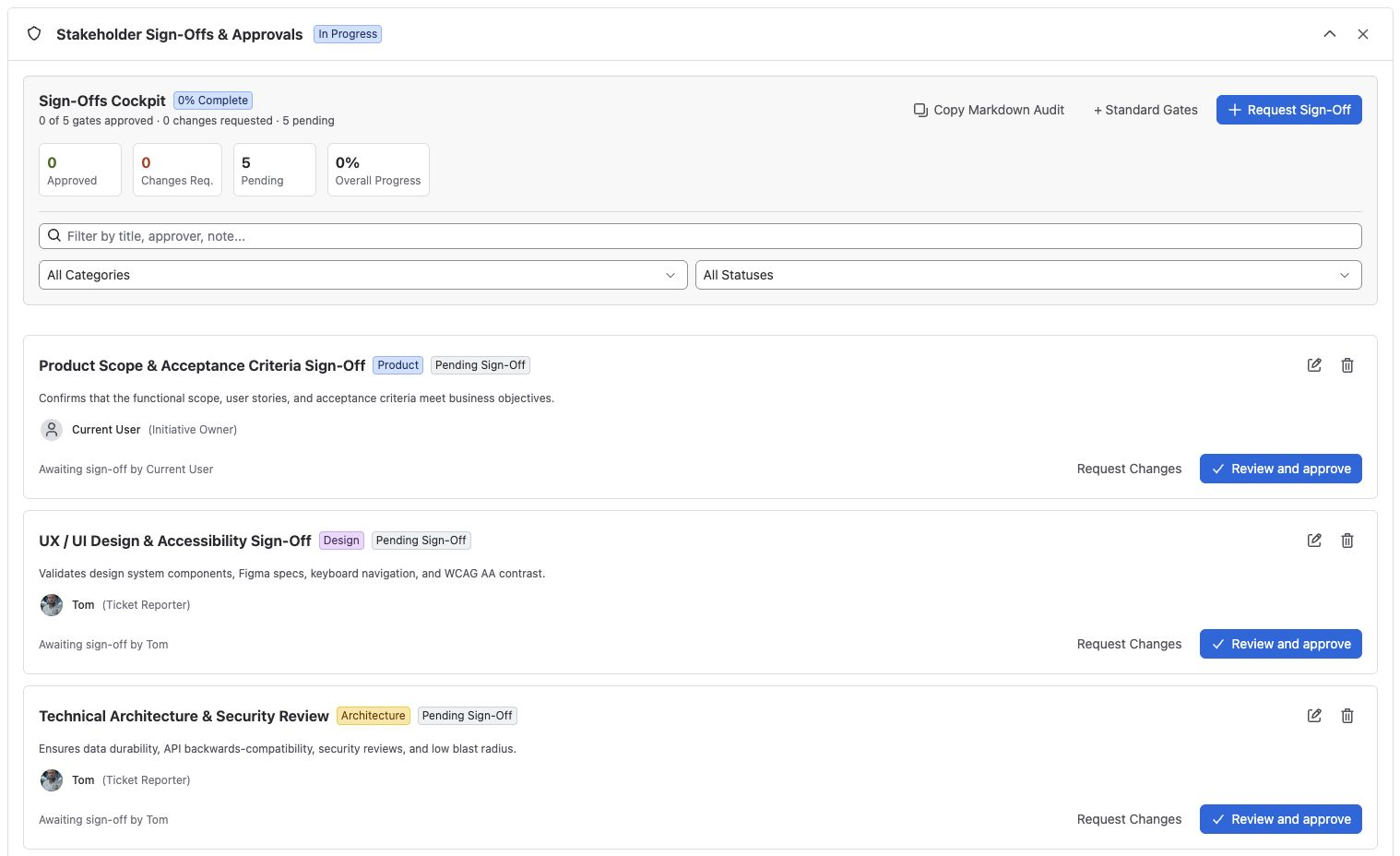
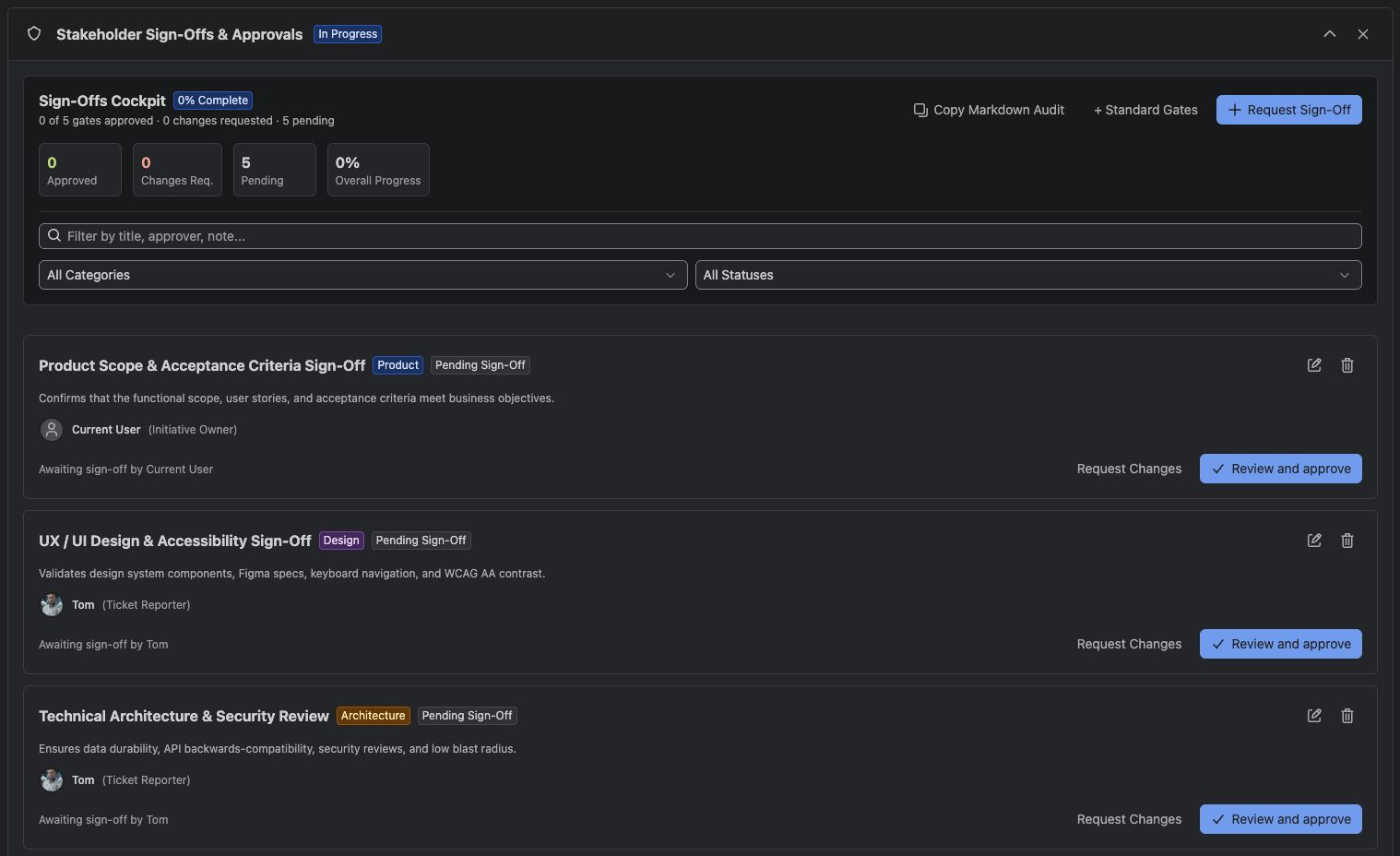
Keep the reasoning behind a choice easy to find. Organize sign-offs by scope and reviewer, so the team can see what was decided and which reviews still need attention.

  • Decision log. Record the chosen approach, reasoning, and important consequences.
  • Focused sign-offs. Define review scope and designate an approver.
  • Review context. Keep approval notes and revisit sign-offs when the work changes.

Decision log

Record the chosen approach, reasoning, and important consequences.

Decision log

Focused sign-offs

Define review scope and designate an approver.

Focused sign-offs

Power Pack for Jira

Make the next step clear.

Start with the questions your team asks every day: who owns this, what does done mean, and what needs a decision? Keep the answers alongside the work.

Talk to us about Power Pack